24K vs 22K Gold Price: 5 Essential Differences
Anyone shopping for gold jewelry or coins eventually runs into the same question: what actually separates 24K vs 22K gold price, and is the difference worth worrying about? The short answer is purity, but there’s more nuance once you factor in durability, use case, and how pricing actually works.
Both karats are considered high-purity gold, but even a small difference in gold content changes both the price and how the metal behaves.
Table of Contents
- What the Karat Number Actually Means
- 24K vs 22K Gold Price: How the Math Works
- Durability and Practical Differences
- Which One Should You Choose
What the Karat Number Actually Means
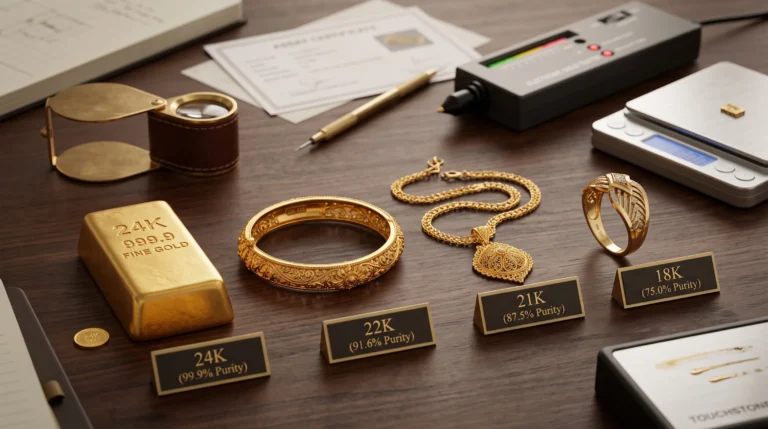
Karat measures how much pure gold is in an item out of 24 total parts. 24K gold is 99.9% pure, essentially as close to pure gold as commercially available. 22K gold is 91.6% pure, meaning about 8.4% of the metal is another alloy, usually copper or silver.
That alloy isn’t just filler. It changes the color slightly, adds strength, and affects how the metal wears over time, which is part of why 22K remains popular for certain types of jewelry despite being less pure than 24K.
24K vs 22K Gold Price: How the Math Works
Since 24K gold contains more actual gold per gram, it costs more than 22K gold at the same weight. The exact difference in 24K vs 22K gold price comes down to a simple ratio.
Here’s the basic comparison:
- 24K gold purity: 99.9% (rounded to 100% for most pricing purposes)
- 22K gold purity: 91.6%
If pure gold is trading at a given spot price per gram, 22K gold is worth roughly 91.6% of that same spot price, since it contains proportionally less actual gold. The formula looks like this:
22K Value = Spot Price × 0.916 × Weight
This is the same basic formula used for calculating gold value by weight, just applied with a different purity percentage. A gold value calculator can run this comparison instantly if you enter the weight and select each karat.

Durability and Practical Differences
Purity and durability move in opposite directions with gold. The purer the gold, the softer it is, which affects how well it holds up in daily wear.
A few practical differences worth knowing:
- 24K gold is soft and more prone to scratching or bending, which is why it’s more commonly used for coins, bars, and investment pieces rather than everyday jewelry.
- 22K gold holds its shape better and resists wear more effectively, making it a common choice for rings, bangles, and pieces meant for regular use.
- Color also differs slightly. 22K gold often has a richer, warmer tone due to its alloy content, while 24K gold has a brighter, more yellow appearance.
Which One Should You Choose
The right choice between 24K and 22K really depends on what you’re buying gold for.
Consider 24K gold if:
- You’re buying coins or bars primarily as an investment.
- You want the highest possible purity for resale or bullion purposes.
- You’re not concerned with daily wear and tear.
Consider 22K gold if:
- You’re buying jewelry meant to be worn regularly.
- You want a warmer gold tone with added durability.
- You’re comfortable with a slightly lower purity in exchange for practicality.
Neither option is objectively better. Investors weighing coins and bars tend to favor 24K, while jewelry buyers often lean toward 22K for everyday practicality.

Frequently Asked Questions
Is 24K gold always more expensive than 22K gold?
At the same weight, yes. 24K gold contains more actual gold content, so it costs more per gram than 22K gold of the same weight.
Why do some countries prefer 22K gold for jewelry?
Many regions, particularly in the Middle East and South Asia, favor 22K gold jewelry because it offers a balance of high purity and better durability than 24K for everyday wear.
Does 22K gold tarnish more than 24K gold?
Not significantly, since both are high-purity gold. The small percentage of alloy in 22K gold can affect appearance slightly over time, but both resist tarnishing far better than lower karats like 14K or 10K.
How do I know which karat my gold actually is?
Look for a hallmark stamp on the item, such as “24K,” “22K,” or a numeric purity mark like “916” for 22K gold. According to the Federal Trade Commission’s Jewelry Guides, gold items sold in the U.S. must accurately disclose their karat content.
Can I convert between 24K and 22K value using a calculator?
Yes. A gold value calculator lets you enter the same weight and switch between karat purities to see how the value changes for each.
Conclusion
The gap in 24K vs 22K gold price comes down to a straightforward difference in purity, roughly 8% less gold content in 22K compared to 24K. Beyond price, the practical differences in durability and color often matter just as much when deciding which one fits your needs. Whether you’re buying for investment or everyday wear, understanding this difference helps you make a more informed purchase.