How to Calculate Gold Value by Weight: 4 Easy Steps
If you’ve ever held an old ring or a handful of coins and wondered what they’re actually worth, knowing how to calculate gold value by weight is the fastest way to get a real answer. The math isn’t complicated once you understand the three numbers involved: weight, purity, and the current spot price.
Jewelers and buyers use this same basic formula, so understanding it puts you in a stronger position whether you’re selling, insuring, or just curious. In this blog you will learn how to calculate blog by weight.
Table of Contents
- The Three Numbers You Need
- Step-by-Step: How to Calculate Gold Value by Weight
- Common Mistakes to Avoid
- When to Use a Gold Calculator Instead
The Three Numbers You Need to Calculate Gold Value
Before doing any math, you need three pieces of information. Skipping any one of these leads to an inaccurate estimate.
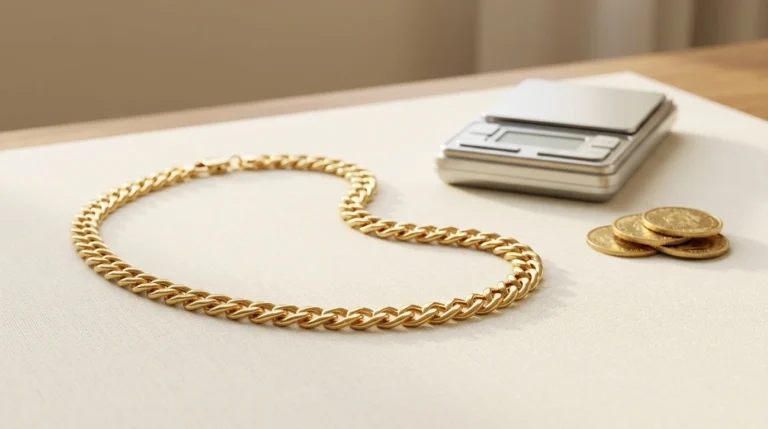
- Weight: Gold is usually weighed in grams or troy ounces. A kitchen scale won’t give you the precision needed, so a jeweler’s scale or precision digital scale is worth using.
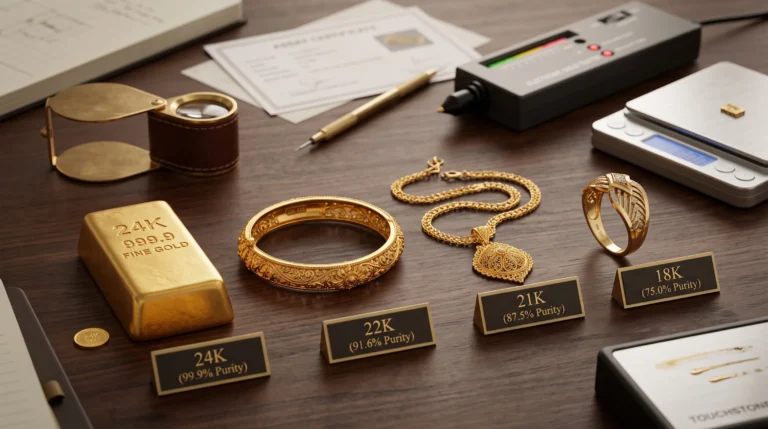
- Purity: This is expressed as a karat number (24K, 22K, 18K, and so on) or as a percentage. Pure gold is 24 karats, and each step down represents a lower percentage of actual gold content.
- Spot price: This is the current market price of gold per troy ounce or gram, which changes throughout each trading day based on global supply and demand.

Step-by-Step: How to Calculate Gold Value by Weight
Once you have those three numbers, the formula itself is straightforward:
Gold Value = Weight × Purity Percentage × Spot Price per Unit
Here’s how that breaks down in practice:
- Weigh your gold item and record the weight in grams or troy ounces.
- Determine the purity. For example, 18K gold is 75% pure, while 14K is about 58.3% pure.
- Find the current spot price per gram or troy ounce, matching the unit you used for weight.
- Multiply the three numbers together to get an estimated value.
For example, if you have 10 grams of 18K gold and the spot price is $80 per gram for pure gold, the calculation looks like this: 10 grams × 0.75 purity × $80 = $600 in gold content.
This number reflects the melt value of the gold itself, not what a buyer might actually pay, which often includes a markup or discount depending on the seller.
Common Mistakes to Avoid When Calculating Gold Value
A few errors come up often enough that they’re worth calling out directly:
- Using an outdated spot price. Gold prices shift throughout the trading day, so an old quote can significantly skew your estimate.
- Guessing at purity. Look for a hallmark stamp (like “14K” or “585”) rather than assuming based on color or appearance alone.
- Mixing units. Make sure your weight and spot price use the same unit, whether that’s grams or troy ounces, before multiplying.
- Forgetting the item isn’t pure gold. Only the actual gold content counts toward value; stones, clasps, and other materials don’t add to the gold weight.
The Federal Trade Commission’s Jewelry Guides explain how gold purity must be disclosed and marked in the United States, which is useful background if you’re trying to verify a karat stamp on an item.
When to Use a Gold Calculator Instead
Doing the math by hand works fine for a single item, but it gets tedious fast if you’re valuing multiple pieces or want to check current prices without tracking them yourself.
A gold value calculator handles the formula automatically. You enter the weight and purity, and it applies the current spot price to give you an instant estimate, which saves time and reduces the chance of a math error.
This is especially useful before selling scrap gold or jewelry, since it gives you a baseline number to compare against any offer a buyer makes.

Frequently Asked Questions
What’s the difference between gold value and what a buyer will pay?
Gold value based on weight and purity reflects the melt value of the metal itself. Buyers often pay less than this to account for refining costs and their own profit margin.
Do I need a professional scale to weigh gold accurately?
A precision digital scale that measures to at least one-tenth of a gram gives a reasonably accurate result. Kitchen or bathroom scales aren’t precise enough for small items like jewelry.
How often does the spot price of gold change?
Gold’s spot price updates continuously throughout the trading day based on global market activity, so it’s worth checking a current price right before calculating value.
Can I calculate the value of gold-plated items the same way?
No. Gold-plated items only have a thin surface layer of gold, so this formula doesn’t apply the same way it does to solid karat gold.
Conclusion
Learning how to calculate gold value by weight comes down to three numbers: weight, purity, and the current spot price. Once you understand the formula, you can quickly estimate what any gold item is worth, whether you’re preparing to sell, insure, or simply satisfy your curiosity. For a faster result, a gold calculator applies the same formula automatically using live pricing.