
A Guide on Understanding Gold Purity Chart for 24K, 22K, 21K and 18K
A gold purity chart helps you avoid confusion while comparing jewelry, coins and bullion based on karat numbers. Karats denote the percentage of gold in any given item and the more you know, the easier it is to analyze quality and value in a matter of seconds. This chart outlines the meaning of each karat level.
Whether shopping for jewelry or verifying karats on an inherited item, this chart is your quick go-to reference.
Table of Contents
- The Gold Purity Chart at a Glance
- What Each Karat Level Means in Practice
- Why Purity Affects Price and Durability
- How to Verify Purity on Your Own Gold
The Gold Purity Chart at a Glance
This explains the most common purities and their corresponding karats:
- 24K gold 99.9% pure
- 22K gold 91.6% pure
- 21K gold 87.5% pure
- 18K gold 75.0% pure
- 14K gold 58.3% pure
- 10K gold 41.7% pure
In the jewelry world, the “parts per 1,000” figure is stamped directly on the piece as a purity mark, and seeing “750” stamped confirms it is 18K gold, even without a karats stamp.

What Each Karat Level Means in Practice
Karats aren’t just numbers, they show real world implications in appearance and marketing, among other things.
- Pure 24K gold is not used for jewelry. Instead, it is used for coins and bars for investors.
- 22K gold consists of 91.6% gold. It is more durable than 24K gold and is used in jewelry and other items.
- 21K gold and 18K gold are closer in gold content. 21K has a slight edge with 91.7% gold. Jewelry made with 21K gold is popular in the Middle East.
- 18K gold is the standard in the jewelry industry for a good balance between the gold and the price of a piece.
- 18K gold is more expensive than jewelry with 14K or 10K gold.
Why Purity Affects Price and Durability
Higher purities mean more gold and more value, but also means more softness. A higher karat means a softer metal.
- Higher karat means higher gold content means higher value.
- Lower karat means harder, less valuable metal.
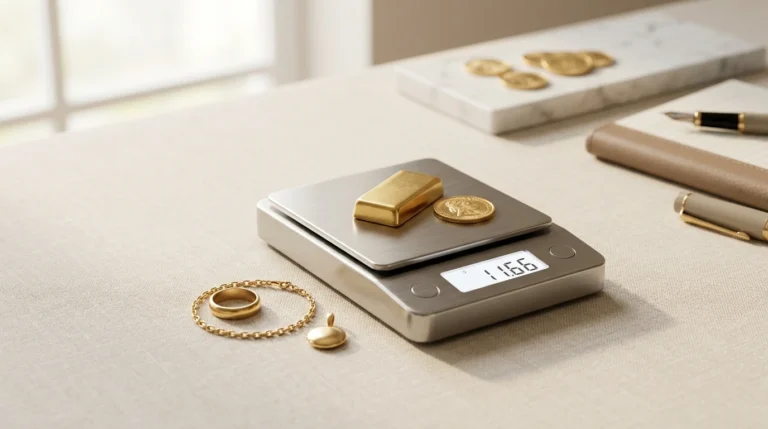
Therefore, jewelry with 24K gold is not suited for daily use, but jewelry with 18K and 14K gold is very popular for daily use jewelry due to its durability. A gold value calculator will input the correct purity percentage automatically when you input a weight and karat.
How to Determine Purity of Your Own Gold
There are a couple of tricks you can use to figure out the karat of your gold before referring to this chart. Look for a hallmark stamp. If you look at the piece of gold jewelry you have, you should be able to find a stamp that says 18K, 750, or something similar on it to indicate its purity.
Look for a jeweler’s mark. According to the Federal Trade Commission’s Jewelry Guides, items that have karat stamps or fineness stamps must also have a registered maker’s mark on them.
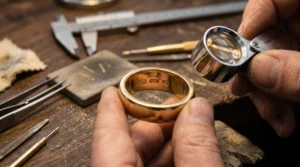
An acid test kit, electronic tester, or jeweler’s loupe is the best way to check a piece of jewelry that is either unmarked or suspect. You shouldn’t try to guess what karat your gold is based on color, because varying alloy combinations can have similar colors.
Frequently Asked Questions
What does the number of karats mean in gold?
Gold that is 24 karats is solid gold, whereas gold that is 18 karats is 18 out of 24 parts gold, leaving the other 6 parts as other metals.
Is 21K gold ever seen in other countries?
21K gold is predominantly sold in jewelry shops in the Middle East and South Asia, but in Western countries you’ll only find 18K and 14K gold jewelry sold.
How can I identify gold by karat without a scale?
The most accurate way is by spotting the hallmark stamp, which should read “18K” or “750” for 18K gold, and “14K” or “585” for 14K gold.
Does higher purity mean better quality jewelry?
Not really. More purity means more gold with less durability, so there’s a trade-off that needs to be considered based on how you plan to wear the jewelry.
Does this chart apply to gold bars and coins?
Yes, coins and bars adhere to the same purity system. Investment grade gold bars are usually 24K.
Conclusion
The gold purity chart 24K 22K 21K 18K provides an easy way to assess the content of any gold based on karat. Generally, the higher the karat/purity, the higher the value. However, less pure gold is more durable, so a lower karat will make a trade-off you need to consider based on the wear of the jewelry. Keeping this chart on you will help you assess all your jewelry, coins, and any other gold you happen to come across.



One Comment